We awoke to a extremely overcast day which looked very threatening. This was a pity as Mick had planned a trip to attend the Killin Highland Games, in Killin and Lyn was a bit down with a cold.
Killin is a small attractive village on the Falls of Dochart, a spectacular series of rapids, at the western end of Loch Tay.
So we set off down the A85 and sure enough not far down the road it started pouring. Undeterred, Mick told Lyn that it wouldn't rain all day so we continued, marveling at the picturesque low clouds over the huge hills through which we were driving.
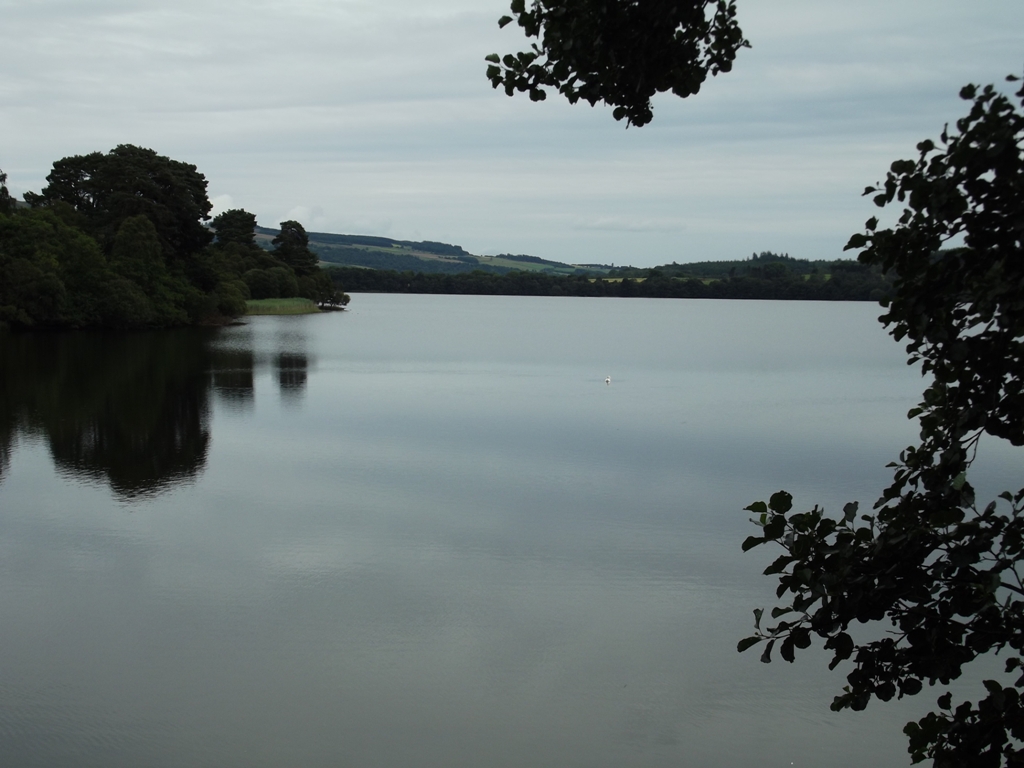
The route took us past Loch Earn, a fresh water loch 17km west of Crieff in Loch Lomond & The Trossachs National Park. The loch is the source of the River Earn which eventually joins the River Tay near the village of Bridge of Earn in Perthshire.
On arriving at Killin, we quickly found a free parking spot just next to the showground and sat in the car in the pouring rain with Lyn looking decidedly uncomfortable. Mick had to think fast as he knew Lyn's patience would last about 5 minutes.
A cup of coffee (we carry our own water/milk/coffee/tea/sugar) filled in some of the time and then some future planning filled in some more. We were so engrossed in the maps that we hadn't noticed that it had almost stopped raining so we donned our wet weather gear and went to the man in the small wooden kiosk at the entrance and paid our £5 each entry.
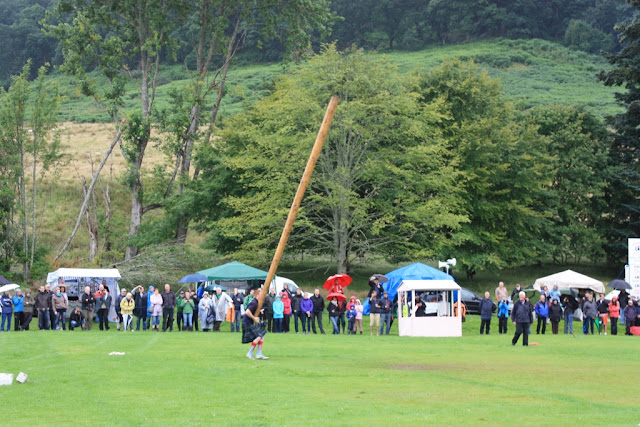
There were a number of events underway during the rain (Scottish people take rain in their stride) including caber tossing, highland dancing and bagpipe playing competitions. There also lots of stalls some good and some of the usual rubbish one finds at fairs.
We stopped to have a chat with the bloke at the Scottish Wildlife stall who knew all about the nesting Ospreys at the Wildlife Centre we had visited the other day. He was telling us that the female Osprey had been nesting at that site for 23 years and that this year she had laid four eggs of which only one had hatched
About this time the sun came out and we became very uncomfortable in our wet weather gear so had to take it all off and Mick took it back to the car.
We stopped wandering to watch the caber tossing and there was a guy in with a green and gold shirt with Australia emblazoned across it so Mick shouted, "Go the Aussie.....". This prompted his partner, who we didn't know was standing nearby, to come and have a chat. They were visiting from Sydney, Australia and as he loved the Scottish sports he was competing at lots of this type of event whilst they were on holidays.
She told us that it was mandatory that competitors wear a kilt so she picked Royal Tartan for his!
His was a big bloke with a bit of fat on him and he didn't do any good but at least he was enjoying himself.
On one of the stands a couple of blokes were smoking locally caught trout and when they were ready we bought one to try for £3. We thought it was very tasty.
After a couple of hours watching some fine Scottish dancing, some Bag piping and some shot put and hammer throwing (the Aussie still didn't do any good!) we went back to the car and headed home.
We took a different route home down the A827 alongside the Loch Tay which is a freshwater loch in the central highlands in the district of Perthshire.
It is a long narrow loch of around 14.55 mi (23.42 km) long, and typically around 1 to 1½ miles wide, following the line of the valley from the south west to north east. It is the sixth largest loch in Scotland by area and over 150 m (490 ft) deep at its deepest.
It seemed to go on forever as we followed it's northern edge for almost the entire length of the A827 from Killin to Aberfeldy. Again the scenery was majestic with huge hills, valleys and of course the Loch.
From Aberfeldy we took the A826 and then the A822 back home to Crieff.
On the way we stopped at an old house where the owner operates a business making all sorts of item out of animal horns and antlers. Mick bought a small carved key ring.
Our friend Roger in Nottingham had told us that the scenery in the Trossachs national Park was spectacular.
And he was right.




 Yes, "You the man..."




Killin is a small attractive village on the Falls of Dochart, a spectacular series of rapids, at the western end of Loch Tay.
So we set off down the A85 and sure enough not far down the road it started pouring. Undeterred, Mick told Lyn that it wouldn't rain all day so we continued, marveling at the picturesque low clouds over the huge hills through which we were driving.
The route took us past Loch Earn, a fresh water loch 17km west of Crieff in Loch Lomond & The Trossachs National Park. The loch is the source of the River Earn which eventually joins the River Tay near the village of Bridge of Earn in Perthshire.
On arriving at Killin, we quickly found a free parking spot just next to the showground and sat in the car in the pouring rain with Lyn looking decidedly uncomfortable. Mick had to think fast as he knew Lyn's patience would last about 5 minutes.
A cup of coffee (we carry our own water/milk/coffee/tea/sugar) filled in some of the time and then some future planning filled in some more. We were so engrossed in the maps that we hadn't noticed that it had almost stopped raining so we donned our wet weather gear and went to the man in the small wooden kiosk at the entrance and paid our £5 each entry.
There were a number of events underway during the rain (Scottish people take rain in their stride) including caber tossing, highland dancing and bagpipe playing competitions. There also lots of stalls some good and some of the usual rubbish one finds at fairs.
We stopped to have a chat with the bloke at the Scottish Wildlife stall who knew all about the nesting Ospreys at the Wildlife Centre we had visited the other day. He was telling us that the female Osprey had been nesting at that site for 23 years and that this year she had laid four eggs of which only one had hatched
About this time the sun came out and we became very uncomfortable in our wet weather gear so had to take it all off and Mick took it back to the car.
We stopped wandering to watch the caber tossing and there was a guy in with a green and gold shirt with Australia emblazoned across it so Mick shouted, "Go the Aussie.....". This prompted his partner, who we didn't know was standing nearby, to come and have a chat. They were visiting from Sydney, Australia and as he loved the Scottish sports he was competing at lots of this type of event whilst they were on holidays.
She told us that it was mandatory that competitors wear a kilt so she picked Royal Tartan for his!
His was a big bloke with a bit of fat on him and he didn't do any good but at least he was enjoying himself.
On one of the stands a couple of blokes were smoking locally caught trout and when they were ready we bought one to try for £3. We thought it was very tasty.
After a couple of hours watching some fine Scottish dancing, some Bag piping and some shot put and hammer throwing (the Aussie still didn't do any good!) we went back to the car and headed home.
We took a different route home down the A827 alongside the Loch Tay which is a freshwater loch in the central highlands in the district of Perthshire.
It is a long narrow loch of around 14.55 mi (23.42 km) long, and typically around 1 to 1½ miles wide, following the line of the valley from the south west to north east. It is the sixth largest loch in Scotland by area and over 150 m (490 ft) deep at its deepest.
It seemed to go on forever as we followed it's northern edge for almost the entire length of the A827 from Killin to Aberfeldy. Again the scenery was majestic with huge hills, valleys and of course the Loch.
From Aberfeldy we took the A826 and then the A822 back home to Crieff.
On the way we stopped at an old house where the owner operates a business making all sorts of item out of animal horns and antlers. Mick bought a small carved key ring.
Our friend Roger in Nottingham had told us that the scenery in the Trossachs national Park was spectacular.
And he was right.

Go the Aussie.....

Young Bag Piper being assessed

This guy was the only competitor that managed to get the caber to go over. Next four pics


Piper tuning up before his performance


Rain clouds over Loch Earn

Loch Tay

Falls of Dochart in Killin


View of Killin across Loch Earn

Horn carvers workshop, my God!

£450 for this deer head